




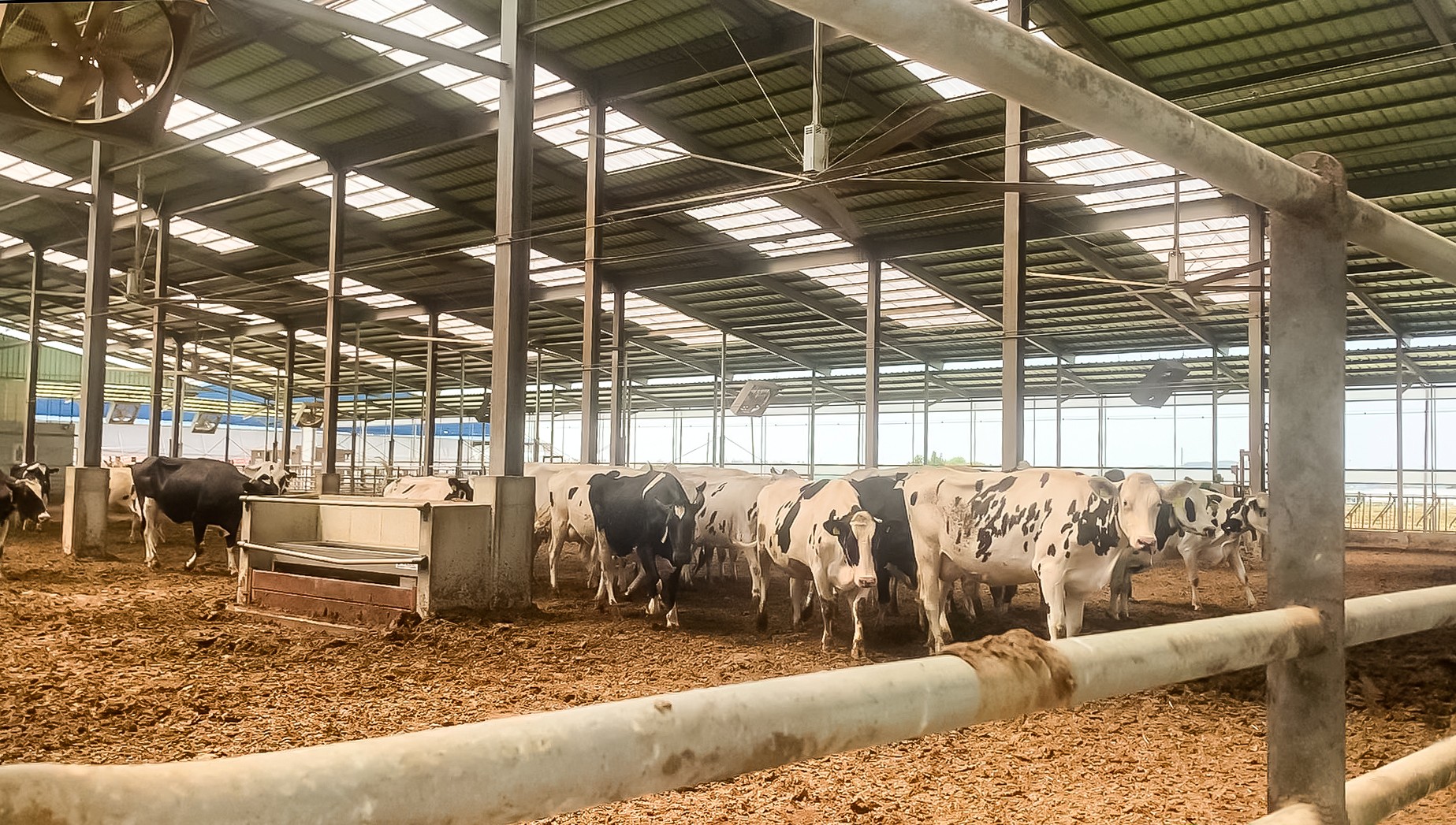
How HVLS Ceiling Fans Improve Livestock Comfort and Dairy Farm Productivity
Introduction
Heat stress is one of the biggest challenges facing modern livestock farms, especially dairy operations. High temperatures, humidity, and poor air circulation can significantly reduce animal comfort, feed intake, and milk production while increasing health risks.
HVLS (High Volume, Low Speed) ceiling fans provide an effective and energy-efficient solution by delivering consistent airflow throughout the barn, helping create a healthier and more productive environment for livestock.
1. Improve Airflow Throughout the Barn
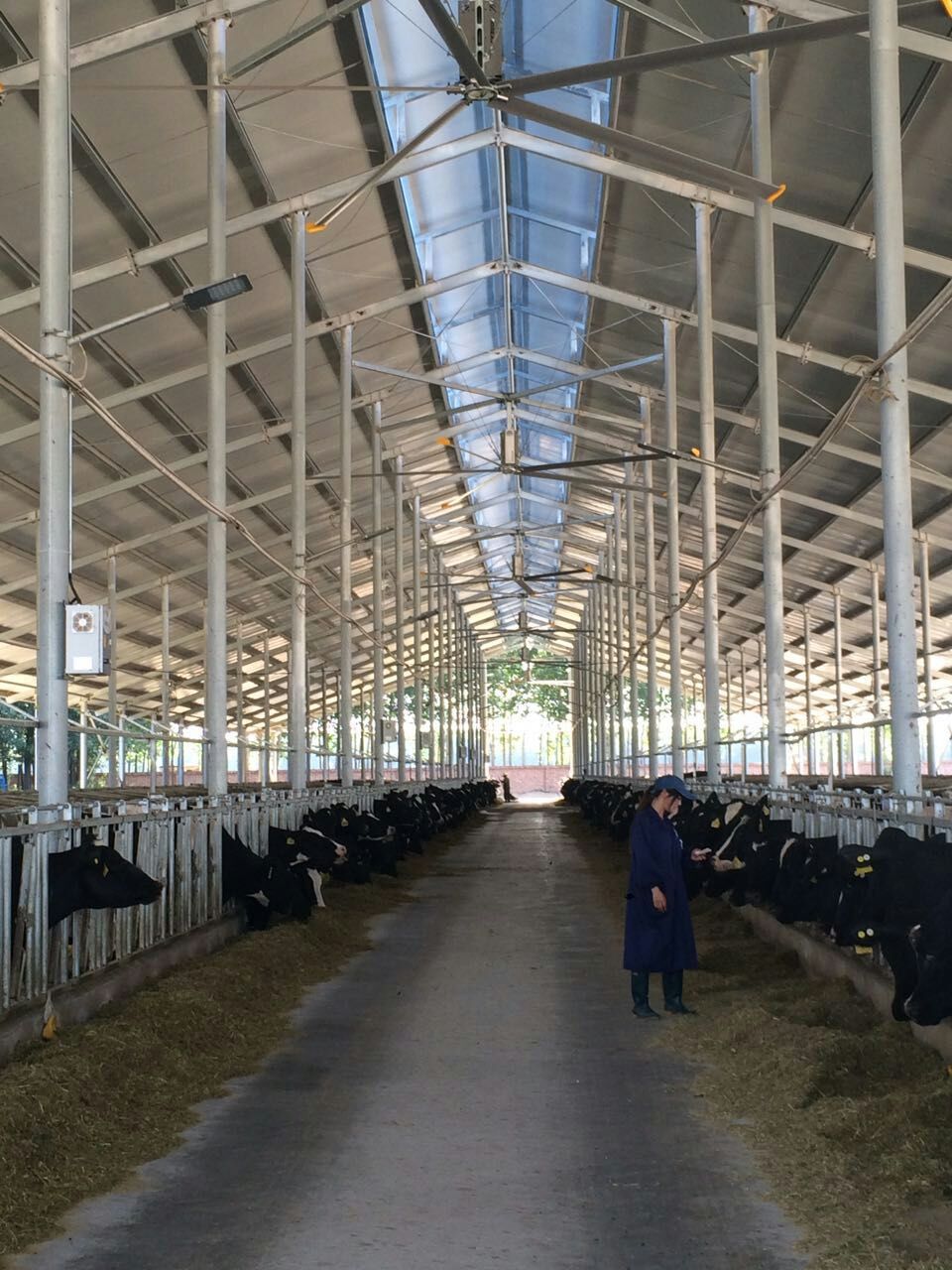
One of the greatest advantages of KALE HVLS ceiling fans is their ability to generate large volumes of slow-moving air that circulates throughout the entire facility. Rather than creating localized drafts, the fans provide uniform airflow that eliminates stagnant air and hot spots around livestock.
Continuous air circulation helps maintain a more consistent indoor climate, improving animal comfort during hot weather.
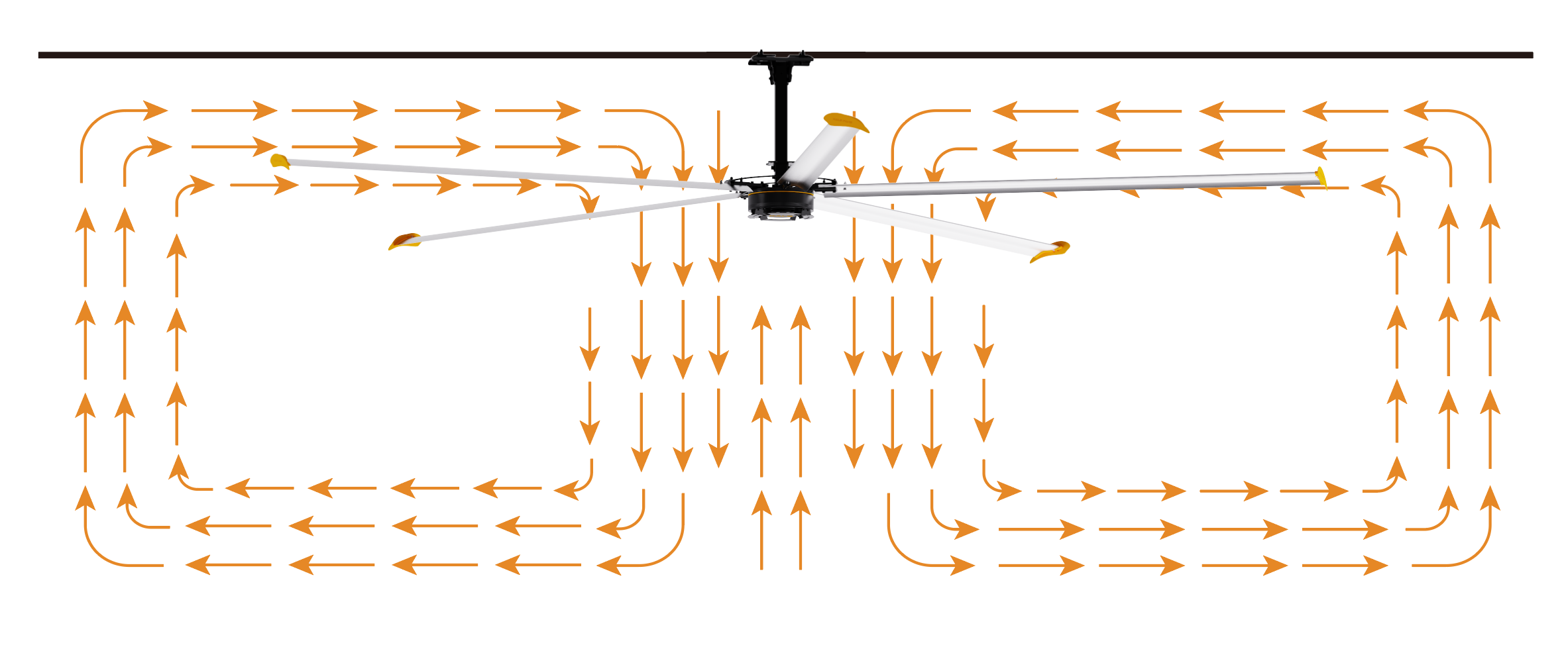
2. 360° Floor Jet Airflow
KALE HVLS fans direct air downward before spreading it evenly across the floor in a 360° floor jet. As the airflow reaches the walls, it naturally rises and recirculates throughout the building.d
This gentle, continuous air movement surrounds livestock with fresh airflow without exposing them to uncomfortable high-speed drafts.
3. Reduce Heat Stress Through Convective Cooling
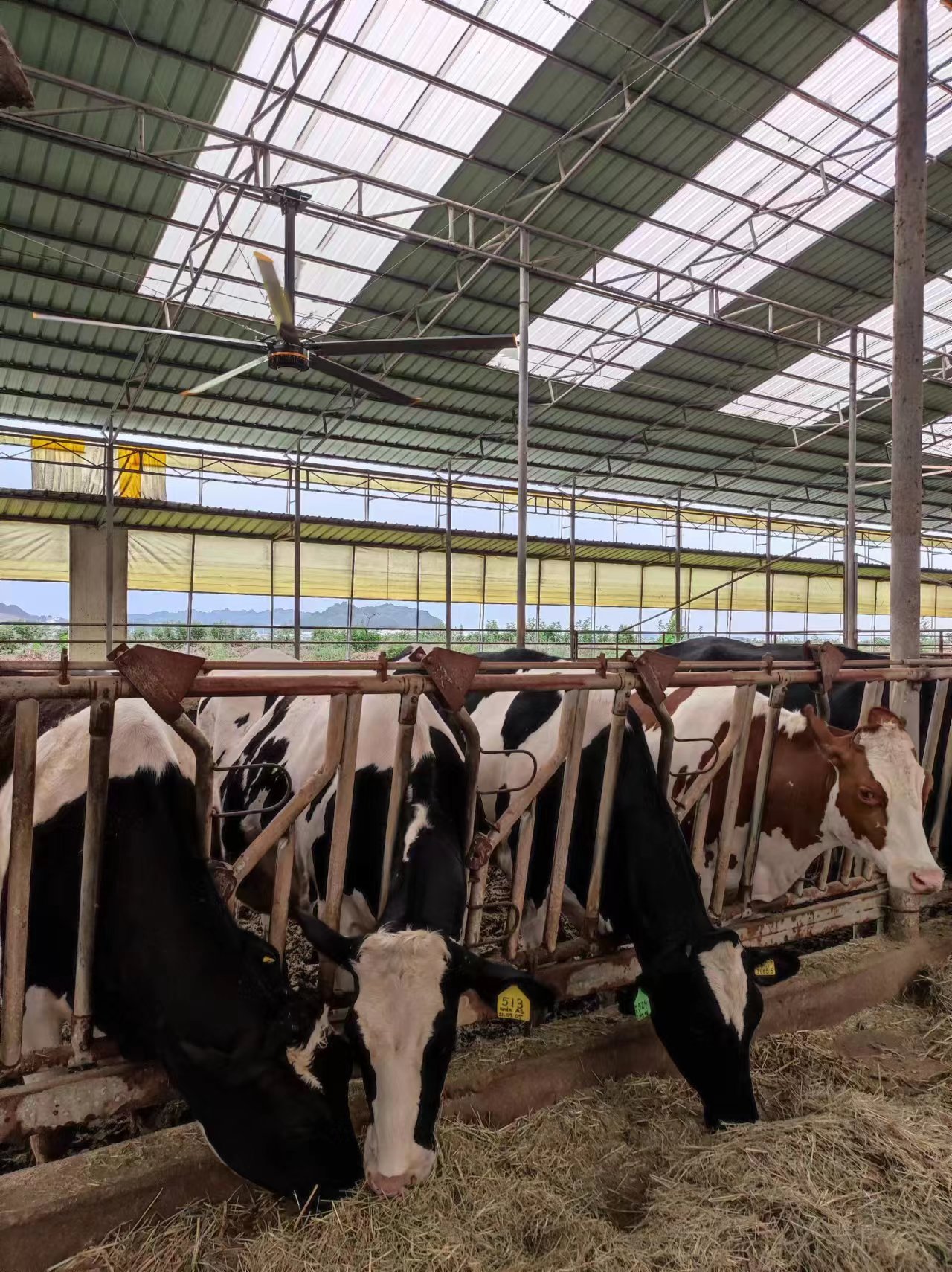
The primary cooling benefit of HVLS fans comes from convective cooling. As air moves across the animals' bodies, it accelerates heat dissipation and improves thermal comfort.
For dairy cattle, air velocities of approximately 2–3 m/s can reduce the perceived temperature by around 4–7°C, significantly lowering heat stress during summer months.
4. Improve Indoor Air Quality
Continuous air movement helps distribute fresh air more evenly and supports natural or mechanical ventilation systems in removing moisture, ammonia, airborne dust, and other contaminants.
Better air circulation also helps keep bedding drier, creating a cleaner environment that supports respiratory health and overall animal welfare.
5. Increase Dairy Productivity
Heat stress directly affects dairy cow performance. Cows experiencing prolonged heat stress often reduce feed intake, increase respiration rates, and produce less milk.
By maintaining a cooler and more comfortable environment, KALE HVLS fans help:
- Lower respiration rates toward normal levels
- Encourage consistent feed intake throughout the day
- Improve overall cow comfort and welfare
- Support higher milk production during hot weather
Field studies have reported summer milk production improvements of approximately 2–5 kg per cow per day in well-ventilated dairy barns. Additional gains may be achieved when HVLS fans are combined with soaking or other evaporative cooling systems.
Conclusion
Maintaining proper airflow is essential for modern livestock facilities. KALE HVLS ceiling fans provide an energy-efficient solution for reducing heat stress, improving air quality, and creating a healthier environment for dairy cattle and other livestock.
By enhancing animal comfort, farms can improve productivity, reduce environmental stress, and achieve better long-term operational performance.
 |
 |
Related Articles

Sep 29, 2026
POP MART Warehouse Case Study: How KALE HVLS Fans Improve Air Circulation
See how KALE HVLS fans help improve cooling, air circulation, employee comfort, and humidity control in a POP MART warehouse

Sep 16, 2026
Why Do Shopping Malls Need HVLS Fans?
Discover why HVLS fans for shopping malls improve airflow, shopper comfort, and energy-efficient cooling in large commercial spaces.

Sep 10, 2026
Why Do Churches Need HVLS Fans?
Discover why HVLS fans are ideal for churches, providing quiet airflow, efficient air circulation, and energy-efficient cooling for large worship spaces.
Similar Products
SIMILAR SOLUTIONS
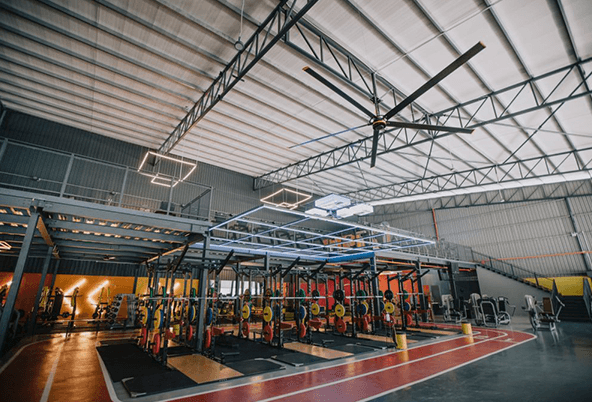
HVLS Fans Bringing a Breeze to Your Fitness Center
HVLS fans can promote better ventilation by increasing the exchange of indoor and outdoor air, improving the overall air quality within the facility.
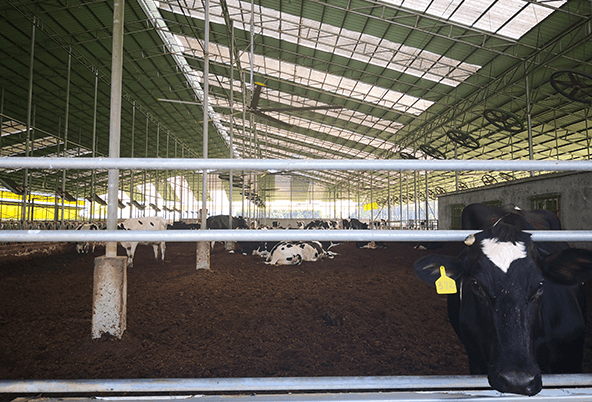
HVLS Ceiling Fan for Ventilation and Cooling of Dairy Farms
The use of large industrial ceiling fans can achieve the entire livestock breeding places and activities in the area of all-around coverage and is the ideal equipment for farm owners to control the growth environment of livestock.
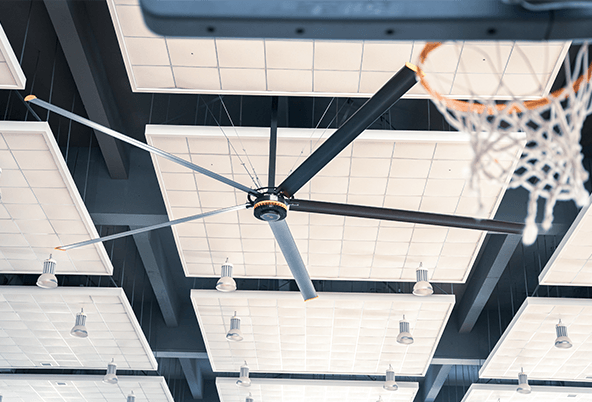
Cooling the Court: Reducing Heat Stress and Energy Costs with Kale HVLS Fans
Unlock the potential of your indoor sports facility with Kale Fans. Elevate the playing experience for athletes and spectators alike by introducing our cutting-edge fan technology. Discover how Kale Fans can make a significant impact on indoor basketball courts or football courts.